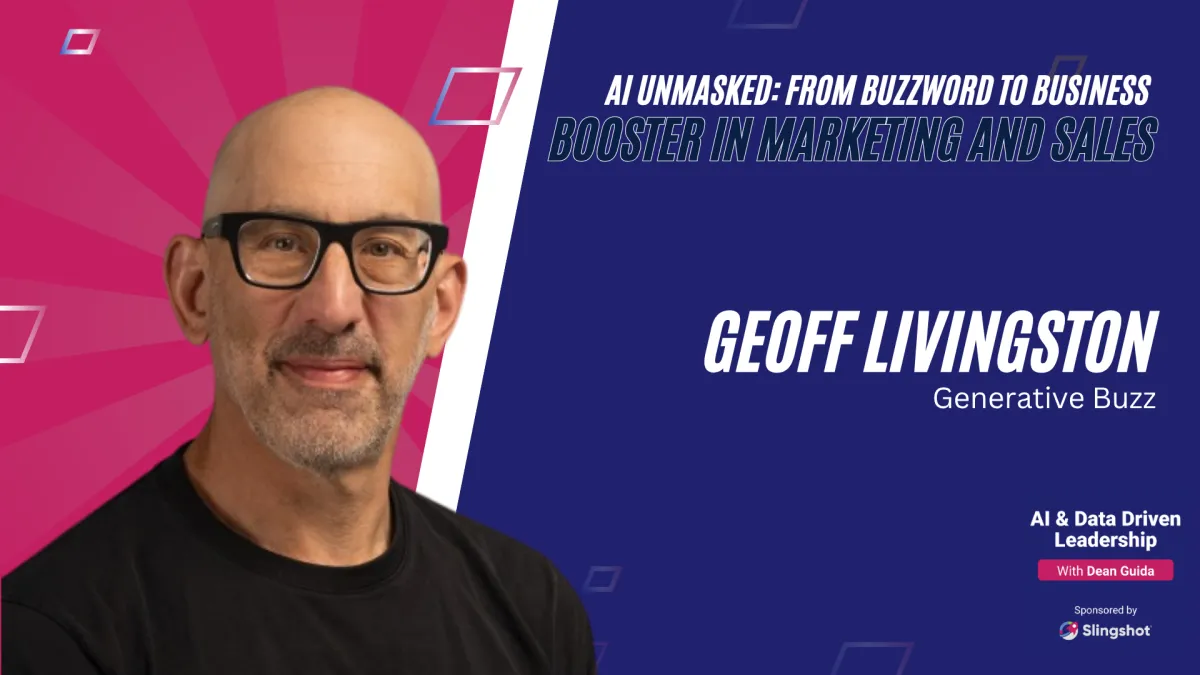
69 - AI Unmasked: From Buzzword to Business Booster in Marketing and Sales
Dean Guida interviews Geoff Livingston on practical AI adoption, marketing, and leadership. Geoff shares how businesses can move beyond AI experimentation by aligning strategy, improving data, and using AI to enhance—not replace—human talent.
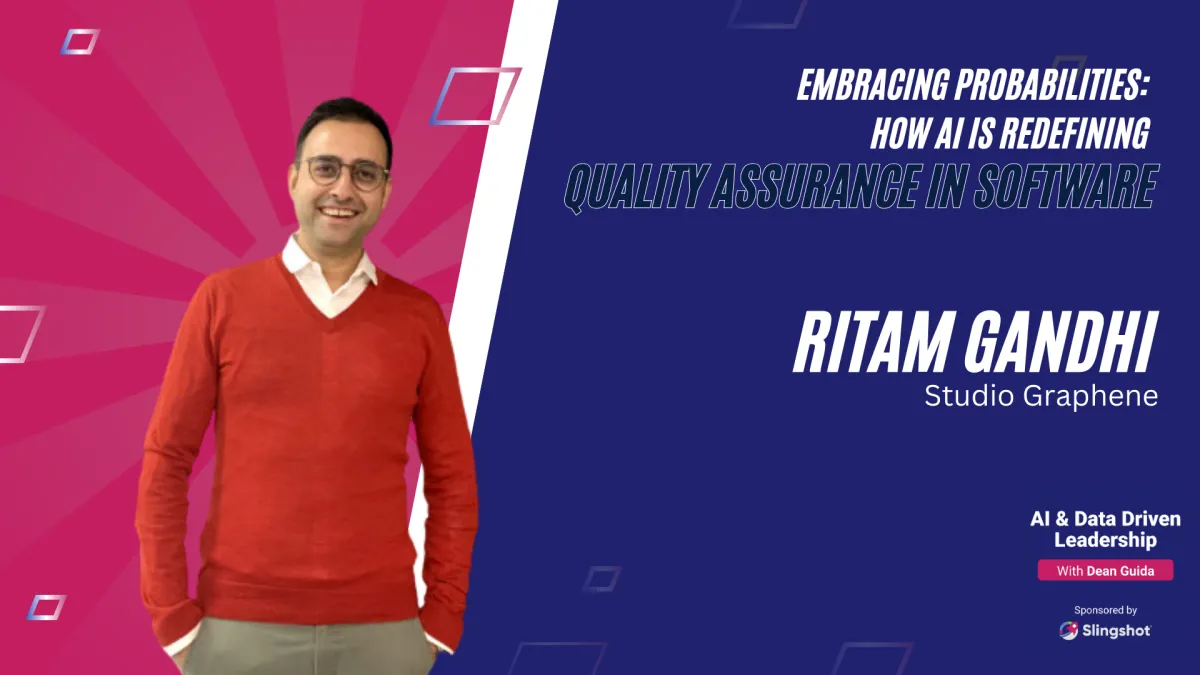
62 - Embracing Probabilities: How AI is Redefining Quality Assurance in Software
In this episode, the host Dean Guida interviews Ritam Gandhi, founder of Studio Graphene, about the transformative impact of AI on software development, product design, and organizational culture. Ritam shares his journey from investment banking tech to building an AI-native studio, emphasizing the shift from deterministic to probabilistic software. They discuss challenges in quality assurance, distributed AI adoption, data security, and the evolving nature of user interfaces.
56 - Mastering Procurement by Solving the Data Fragmentation Challenge
In this episode, Dean Guida interviews Anders Lillevik, Founder and CEO of Focal Point, about the evolution of procurement from a cost-focused, transactional role to a strategic, data-driven discipline. Anders discusses how AI and data analytics are transforming procurement, enabling automation of routine tasks and deeper risk management. He highlights the importance of leadership, trust in AI, and balancing innovation with regulatory compliance. Practical examples illustrate how procurement analytics can optimize costs and working capital.

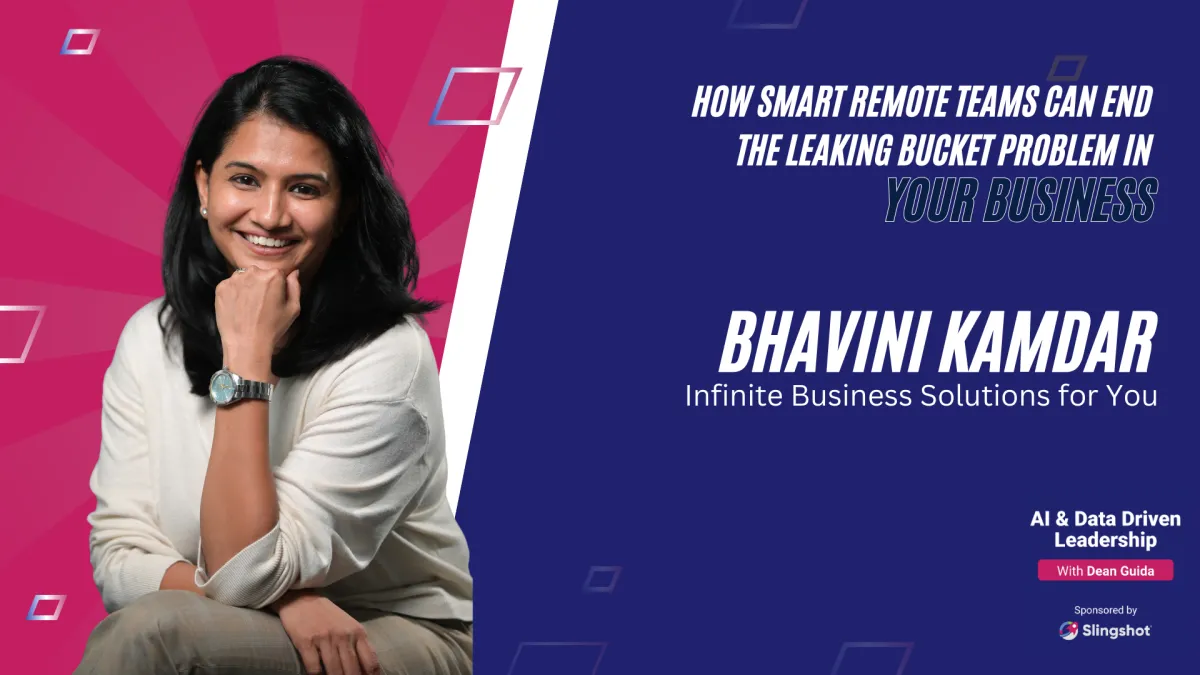
53 - How Smart Remote Teams Can End the Leaking Bucket Problem in Your Business
In this episode, Bhavini Kamdar, Founder and CEO of Infinity Business Solutions, shares her entrepreneurial journey from finance to building a company that manages remote teams for small businesses. She discusses leadership lessons, the integration of AI and data, and the importance of adaptability. Bhavini highlights how AI enhances productivity, dispels common misconceptions, and stresses the value of rest and personal growth. She also shares her passion for dog rescue and offers advice on embracing change.